43rd Annual Conference of the European Society for the History of Human Sciences

Between the 25th and the 28th of June, the FREEPSY team will be joining other historians, clinicians and researchers for the 43rd Annual Conference of the European Society for the History of Human Sciences, taking place at the University of Essex.

This year, the conference offers a rich, four-day programme with a truly international array of presenters and topics ranging from the borders of the self, the history of emotions, embodied subjects and internalization all the way to war memory and xenophobia, government and the human sciences and scientific sociability and intimacy. 

Continue reading “43rd Annual Conference of the European Society for the History of Human Sciences”

Caring Futures: Contradictions, Transformation and Revolutionary Possibilities 

Between May 29th and 31st, the FREEPSY team will be participating in the Caring Futures Conference in Paris, where we will join other artists, activists and scholars to discuss the transformation and revolutionary potential in historical and current health care practices in order to work out alternative futures for care within different communities. 

Continue reading “Caring Futures: Contradictions, Transformation and Revolutionary Possibilities “

Reflections on the FREEPSY stream on ‘Mental Health Commons’ at the MCCT 2024

In early April, we were joined by over twenty colleagues from various parts of the world to reflect on the meanings of a ‘mental health commons’, exploring the axes of fantasy, utopia and infrastructure over a series of five panels at the Midlands Conference in Critical Thought (MCCT), in Nottingham, UK. For the first time this year, the organisers of the London Conference in Critical Thought (LCCT) decided to branch out to other parts of the UK. This gave rise to the Midlands Conference. Members of our FREEPSY team had the pleasure to take part in the organisation of the Midlands Conference, to listen to a variety of academic and creative contributions and to get in touch with colleagues from the most diverse fields and backgrounds.

Continue reading “Reflections on the FREEPSY stream on ‘Mental Health Commons’ at the MCCT 2024”

<strong> </strong>‘Manifesto for Infrastructural Thinking: Living with Psychoanalysis in a Glitch’, byRaluca Soreanu & Ana Minozzo<strong> </strong>

New article published in Psychoanalysis, Culture & Society, authored by Raluca Soreanu & Ana Minozzo, available in Open Access format

The paper is a manifesto for an infrastructural turn in psychoanalysis, proposing to look at institutions ‘slantwise’. It theorises psychoanalytic infrastructural thinking, pondering on its qualities as a particular kind of orientation to action, and showing its capacity to consider multiple transferences and ambivalence, as well as new fantasies on gain, accumulation and redistribution. It articulates the relationship between infrastructural thinking and a postural theory of the subject, centred on considering inclinations, orientations, and disorientations in relation to objects. Drawing on ethnographic and archival material, it constructs a ‘scene’ for observing infrastructural thinking at work, in psychoanalytic free clinics in Brazil, in the 1970s, and up to our times. It looks at the infrastructural creativities of the free clinics, which promise to renew the relationship of psychoanalysis with itself and with its others. Exploring the intersection of psychoanalysis and phenomenology, it traces the work of infrastructural thinking in postural moments, glitches, disorientations, or slips of the tongue.

Raluca Soreanu and Ana Minozzo would like to extend a special thank you to their interviewees in Brazil, who shared their histories, orientations and insights with the authors. 

Available Open Access at https://rdcu.be/dEQof

Or: https://link.springer.com/article/10.1057/s41282-024-00444-6
Inaugural Free Clinics Working Group

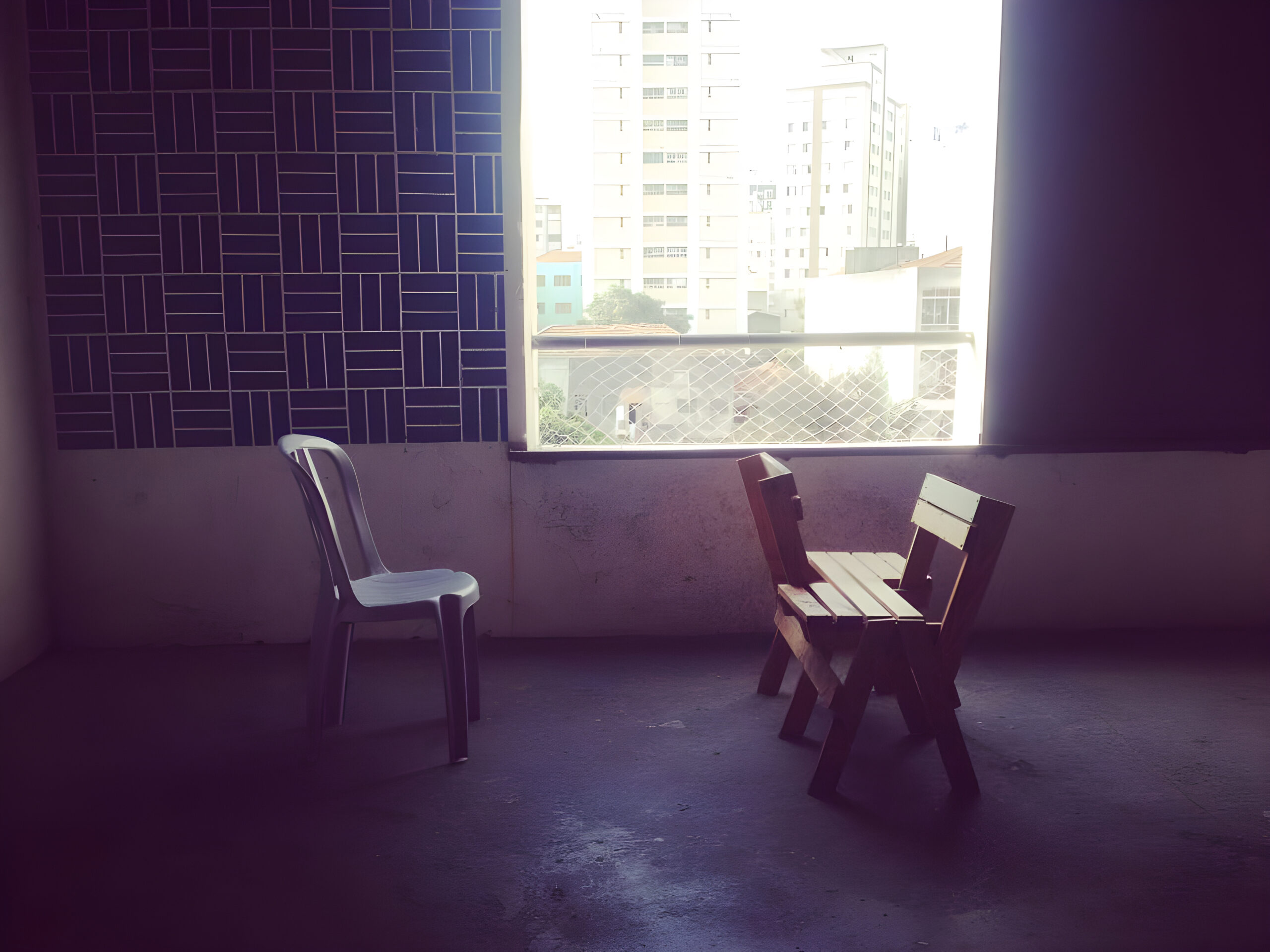
On the 15th of January 2024, we had the joy of inaugurating yet another FREEPSY project initiative, the Free Clinics Working Group. Gathered at the Freud Museum, in North London, as an intimate group, we counted with the presence of two important researchers and clinicians at the forefront of the free clinic’s movement in Latin America: Dr Carolina Besoain from Chile and Anderson Santos from Brazil. Over the whole afternoon and into the evening, we heard from their work on the ground, their radical and innovative research and their vibrant web of collaborative practices, alive across Argentina, Brazil and Chile. 

Continue reading “Inaugural Free Clinics Working Group“

The ISFN Book Presentation Series. Anna Borgos, ‘Women in the Budapest School of Psychoanalysis. Girls of Tomorrow’. 3 February, 2024

This book shines a light on the social and professional factors on the life and work of the first women psychoanalysts in Budapest, examining documentary evidence of their lives and drawing upon the literature of psychoanalysis, social history, and gender studies. Through their life stories, not only the history of psychoanalysis, but also the processes of 20th-century women’s history and social-political developments in Hungary and the region can be reconstructed. Key psychoanalysts explored include Lilly Hajdu, Edit Gyömrői, Alice Bálint, Vilma Kovács, Lillián Rotter and twelve further women analysts.

Continue reading “The ISFN Book Presentation Series. Anna Borgos, ‘Women in the Budapest School of Psychoanalysis. Girls of Tomorrow’. 3 February, 2024“

Assistance for the Mind. Remembering and Rebuilding Radical Praxis in The Clinic by Jaice Sara Titus

The article discusses the intersection of psychoanalysis and socialist politics, exploring the historical relationship between the two and the challenges faced in balancing political commitments with psychoanalytic work. It delves into the early aspirations of psychoanalysis to be accessible to all through free clinics. It discusses how this vision was briefly realized before being overshadowed by conservative strands of psychoanalysis. The article introduces the Red Clinic, a contemporary initiative formed by anti-capitalist clinicians aiming to provide accessible psychotherapy while intertwining personal struggles with political realities. This article offers a glimpse into the clinic’s vision, challenges, and global outreach efforts. 

Continue reading “Assistance for the Mind. Remembering and Rebuilding Radical Praxis in The Clinic by Jaice Sara Titus “