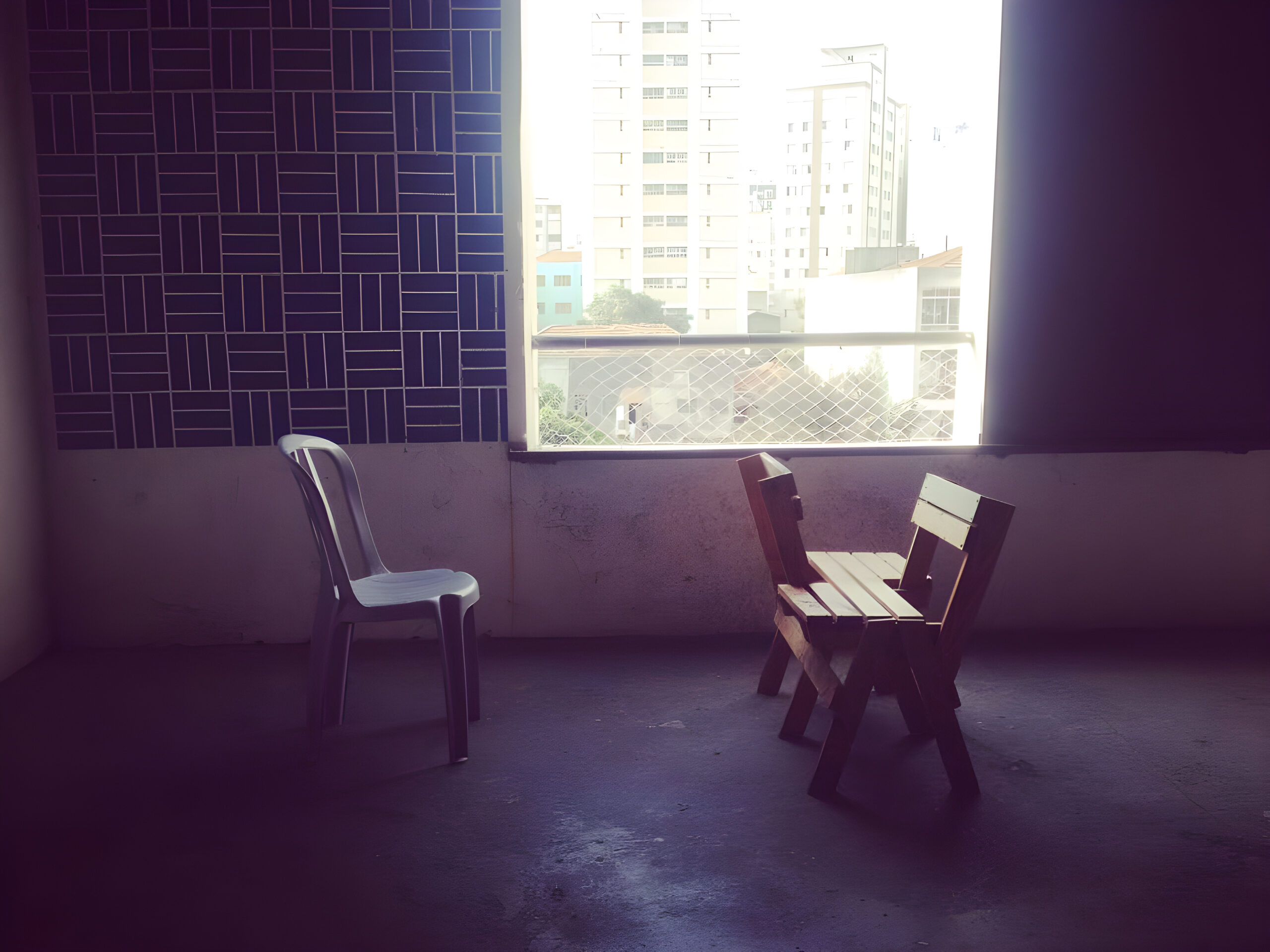
Trans Experiences and Testimonies. On the Importance of Recovering Marginalised Knowledge. Cecilia Montenegro Alba Rueda

Grupo Diversidad at Hospital Ameghino in Buenos Aires.

In the landscape of global mental health, the pioneering work emerging from Buenos Aires’s Hospital CSM N° 3 “Arturo Ameghino” offers a vital model for psychoanalytic practice in the field of diversity. The recent official establishment of the “Área Diversidad” in December 2024 represents a significant institutional milestone, yet it is the culmination of a years-long, pre-existing clinical commitment. A dedicated group of clinicians has long been forging a path of specialized accompaniment for the LGBTTIQA+ community, with a particular focus on transgender and non-binary children, adolescents, and adults. Their work demonstrates how psychoanalytic theory, when critically engaged, can be mobilized to provide affirming and nuanced care, challenging the historical pathologization of diverse gender and sexual experiences.

What makes this initiative particularly instructive for an international audience is its deeply embedded methodology. The clinicians operate not in an institutional vacuum but within a vibrant ecosystem of care, maintaining close collaboration with city-wide health networks and community activists. This dialogue between clinic, community, and public health policy enriches their practice, allowing them to refine an approach that is both theoretically robust and socially responsive. By sharing their journey from a grassroots collective to an officially sanctioned area, these colleagues from Buenos Aires provide a powerful blueprint. They teach us how to build bridges, challenge institutional inertia, and pioneer a contemporary, ethical psychoanalysis that holds the singular subject at its core—a lesson of profound importance for colleagues worldwide.

*This text was written in collaboration by Cecilia Montenegro, a member of the Diversity Group of CSM No. 3 Ameghino, and Alba Rueda. Alba Rueda is an Argentine trans activist and politician, and a prominent defender of the human rights of LGBTIQ+ people from the Global South. She served as Undersecretary for Diversity Policies in the Ministry of Women, Gender, and Diversity (2020–2022), and later as Argentina’s Special Representative on Sexual Orientation and Gender Identity in the Ministry of Foreign Affairs, International Trade, and Worship.

Continue reading “Trans Experiences and Testimonies. On the Importance of Recovering Marginalised Knowledge. Cecilia Montenegro Alba Rueda”

“100 Years of Innovation and Critique: On Free Psychoanalytic Clinics as a Global Movement” — A collective presentation by the FREEPSY project team at the Institute of Psychoanalysis.

On October 8 2025 FREEPSY presented at the Applied Section Meeting of the Institute of Psychoanalysis in London.

In this presentation, we argued that psychoanalytic clinics have had rich political and clinical ‘lives’ over the past century, but these have often remained invisible. We see psychoanalytic free clinics, in their plural and polyvocal manifestations, as a global movement, connected by a series of important theoretical-clinical principles, by an ethos, and by a rich set of revisions and innovations in the domain of the psychoanalytic frame. All these innovations need to be both historicised and theorised. In our discussion, we traced the metamorphoses of Freud’s couch, which happen when psychoanalysis becomes entangled with emancipatory movements and liberation struggles of various kinds, and engages with the realities of social inequalities based on race, class, gender, poverty, and other forms of marginalization. We offered a critique of the idea of ‘applied psychoanalysis’ and placed the notion of ‘infrastructures’ and ‘infrastructural thinking’ at the heart of understanding how autonomous collectives of clinicians invested in the social mission of psychoanalysis innovate, by putting time, space, money, and suffering in new relations. Drawing on theoretical, historical, ethnographic and arts methods research, we moved from the ‘Barefoot Psychoanalyst’ in the 60s and 70s in the UK, to the work of Budapest Polyclinic pioneers in the 20s and 30s, to Brazilian antiracist free clinics in the past decade, to the artistic figuration of a clinic with porous and pliable boundaries.  

Continue reading ““100 Years of Innovation and Critique: On Free Psychoanalytic Clinics as a Global Movement” — A collective presentation by the FREEPSY project team at the Institute of Psychoanalysis.”

Raluca Soreanu on ‘The Psychic Life of Fragments: On Walking across a Mosaic’ at the Université Paris Cité

On November 22, Raluca Soreanu will attend the International Conference ‘De Sándor Ferenczi à l’École de Budapest: Témoins contemporains’ and present the paper ‘La vie psychique des fragments : Sur la traversée d’une mosaïque’

Continue reading “Raluca Soreanu on ‘The Psychic Life of Fragments: On Walking across a Mosaic’ at the Université Paris Cité”

Free Clinics Working Group #5: Territorial Listening with Jorge Broide and colleagues

Following the vibrant energy of our fourth meeting, the Free Clinics Working Group (FCWG) convened for its fifth iteration on Monday, 15th of September, in person at LiFt in London and online with colleagues peppered all around the globe. We were honoured to host a profound session of discussion and sharing in the presence of international collaborators and guests, centring on the travelling concept of ‘Territorial Listening’.

Continue reading “Free Clinics Working Group #5: Territorial Listening with Jorge Broide and colleagues”

Early Women Psychoanalysts: History, Biography, Contemporary Relevance (book presentation)

Online December 10th 6-7:30 pm, Freud Museum London 

In this online event, hosted by the Freud Museum, we welcome Klara Naszkowska, editor of Early Women Psychoanalysts: History, Biography, and Contemporary Relevance to discuss her book with our FREEPSY member Ana Tomčić, who contributed to the publication. Join us for a discussion that will touch explore a range of female analysts that played a role in the early development of the field of psychoanalysis.

Continue reading “Early Women Psychoanalysts: History, Biography, Contemporary Relevance (book presentation)”

FREEPSY at the La Conference 2025: Feminine Desire in Canada

We are thrilled to announce that the FreePsy Project will be participating in the upcoming La Conference 2025, organised by the Corpo Freudiano Vancouver. This significant event, titled ‘Feminine Desire: Honouring the Life and Work of Anne Dufourmantelle and Mari Ruti’, will take place from October 17-18, 2025, in the vibrant city of Vancouver, BC, in Canada.

Continue reading “FREEPSY at the La Conference 2025: Feminine Desire in Canada”

Book launch of Lizaveta van Munsteren’s The Vicissitudes of Psychoanalysis in Soviet Russia, 1930-1930.

The evening will feature a conversation between Lizaveta van Munsteren, Raluca Soreanu, Catherine Humble, and Natalya Chernyshova, an open discussion, and a wine reception.

Friday, 10th of October

Doors open at 6:30 PM, event starts at 7:00 PM

Swedenborg House

20–21 Bloomsbury Way, London,

WC1A 2TH

RVSP via Eventbrite page

Continue reading “Book launch of Lizaveta van Munsteren’s The Vicissitudes of Psychoanalysis in Soviet Russia, 1930-1930.”

We are Launching Zines!

Exploring Mental Health Commons and Creative Togetherness

At FREEPSY, we are launching a collection of zines, meant to crystallise moments when we come together with colleagues and collaborators from around the world, to focus on an idea, such as mental health commons or radical listening. These zines are published in both physical and digital form, and they are free to read and download. We hope they will travel far and spark up new exchanges.

Continue reading “We are Launching Zines!”

Radical Listening: Collective Practices, Histories and Possible Futures 

LCCT conference online stream organised by the FREEPSY collective. Monday 14 & Saturday 19 July 2025

Can ‘listening’ foster new forms of relationality in a collapsing world? What forms, formats, rituals and infrastructures of listening to one another have made life liveable, enjoyable or, simply, possible in recent times?

This online event brings together colleagues from various fields of research and practice to share stories, archival material, ethnographies, speculations or theories around forms of listening to individual or collective experiences that offer a radical mode of witnessing and togetherness, especially in challenging contexts. The event features papers, presentations and creative interventions addressing listening as an act of ethics and of care, where more than just recognition is at stake, rather, when a joint construction of a world-in-common can unfold.

Continue reading “Radical Listening: Collective Practices, Histories and Possible Futures “