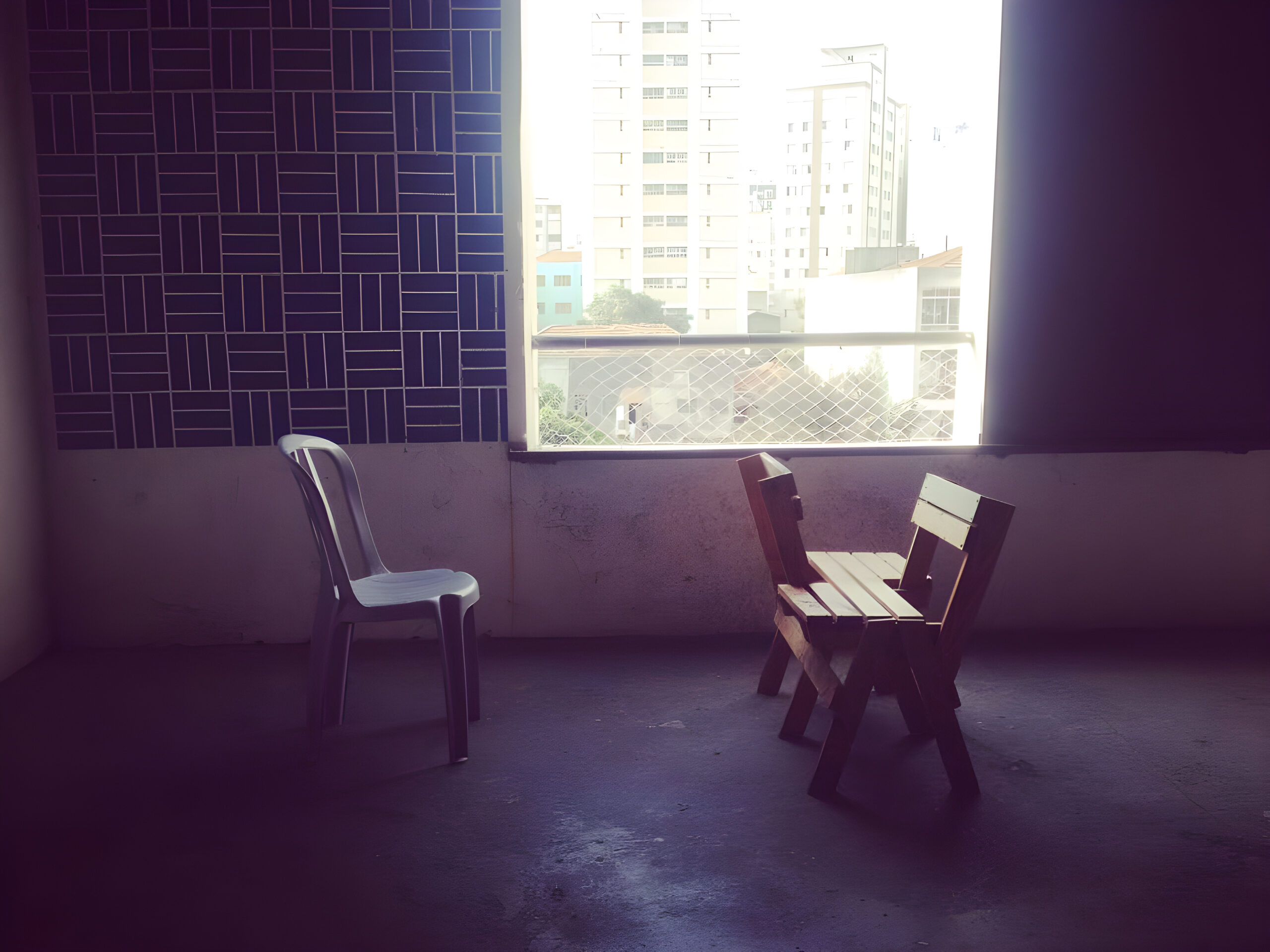

Seminar Series in São Paulo
We are thrilled to share the programme for ‘Escrita da Escuta’ (Writing of Listening) , a series of eleven seminars and writing workshops running from April to October 2026 in São Paulo, Brazil, in partnership with research groups from USP, UNIFESP and us from FREEPSY/University of Essex. The scientific committee and conceptual direction of the series is a collaboration between Dr Alessandra Affortunati Martins, a researcher of Cátedra Edward Said, Dr Ana Minozzo, Postdoctoral researcher at FREEPSY, and Dr Ana Gebrim – together shaping the thematic arc, guest invitations, and the workshop methodologies across both blocks through the year.
What does it mean to write and interrogate our position when listening? How can the figure of the foreigner – the one who arrives from elsewhere – become an ethical compass for the encounter? Across these eleven sessions, the series proposes that writing is never a solitary act of capture, but a gesture of testimony that responds to what is fragile, suffocated, or on the verge of being silenced. Drawing on Anne Dufourmantelle’s notion of gentleness as an ethical concept and Ariella Azoulay’s critique of imperial logics, participants will explore modes of being-together that do not erase difference but allow it to germinate. The first block (April–May) focuses on structures, infrastructures, and dispositifs of care – asking how psychoanalytic listening can be rethought from feminist and post-humanist perspectives grounded in the Global South. The second block (September–October) turns to collective desires, solidarity, catastrophe, and their narratives, with particular attention to Palestine and Argentina as sites where the therapeutic function of solidarity becomes visible in insurgent forms.
The programme features an extraordinary line-up of national and international guests:
- Dr Alessandra Affortunati Martins (Cátedra Edward Said UNIFESP) on the aesthetics of the foreigner.
- Dr Ana Minozzo (FREEPSY/University of Essex) on psychosocial ethnography, infrastructures of listening, and the feminist ethics of care in public psychoanalytic clinics in Brazil and Argentina.
- Dr Aline Souza Martins (USP) on feminist methodologies and the politics of noticing.
- Dr Carolina Besoain (Colectivo Trenza, Chile) on dreams and Palestine (‘Gaza in the consulting room’).
- Dr Simona Taliani (University of Naples L’Orientale and Associazione Frantz Fanon) on migration, dreams and a ‘de-confiscated’ ethnopsychiatry. (‘Gaza in the consulting room’).
- Prof Raluca Soreanu and Ana Cvorovic (FREEPSY/University of Essex) on a writing workshop from objects and archival images from free psychoanalytic clinics.
- Dr Ana Gebrim (USP and Desorientalismos) on narratives of catastrophe and collective desire in Palestine and Lebanon.
- Dr Alexia Bretas (UFABC) on the foreigner from within and solidarity beyond identification.
Across these encounters, participants are invited not only to discuss theoretical texts but to experiment with writing as a lived practice. Each session weaves together close reading, collective reflection, and guided writing exercises – from ethnographic fieldnotes and psychoanalytic fragments to poetic testimony and counter-archival experiments. The workshops ask: How do we write care without neutralising it? How do we bear witness to catastrophe without appropriating suffering? What formal and affective resources can we borrow from the figure of the foreigner – one who listens from the margins, who does not presume to belong, and whose very displacement becomes a condition for ethical attention? These questions are explored through concrete exercises, including writing from objects, responding to visual archives, and crafting narratives that hold the tension between the clinical and the political, the intimate and the collective.
The series is structured in two blocks (April–May and September–October 2026), with in-person sessions at UNIFESP’s Reitoria in São Paulo and two extraordinary online meetings (16 May & 17 October). Registration is free and open (please note that the original deadline of 30 March 2026 has passed – for late availability, interested participants are encouraged to contact the organisers directly).
This activity is a realisation of the Cátedra Edward Said (UNIFESP) in collaboration with FREEPSY.

