
Free Clinics: The Past and the Future of Psychoanalysis
December 4th, 5th, 6th 2026, 9am-5pm
A three-day interdisciplinary conference organised by the FREEPSY Collective
In person at The Lift, 45 White Lion Street, London, N1 9PW & online, via Zoom

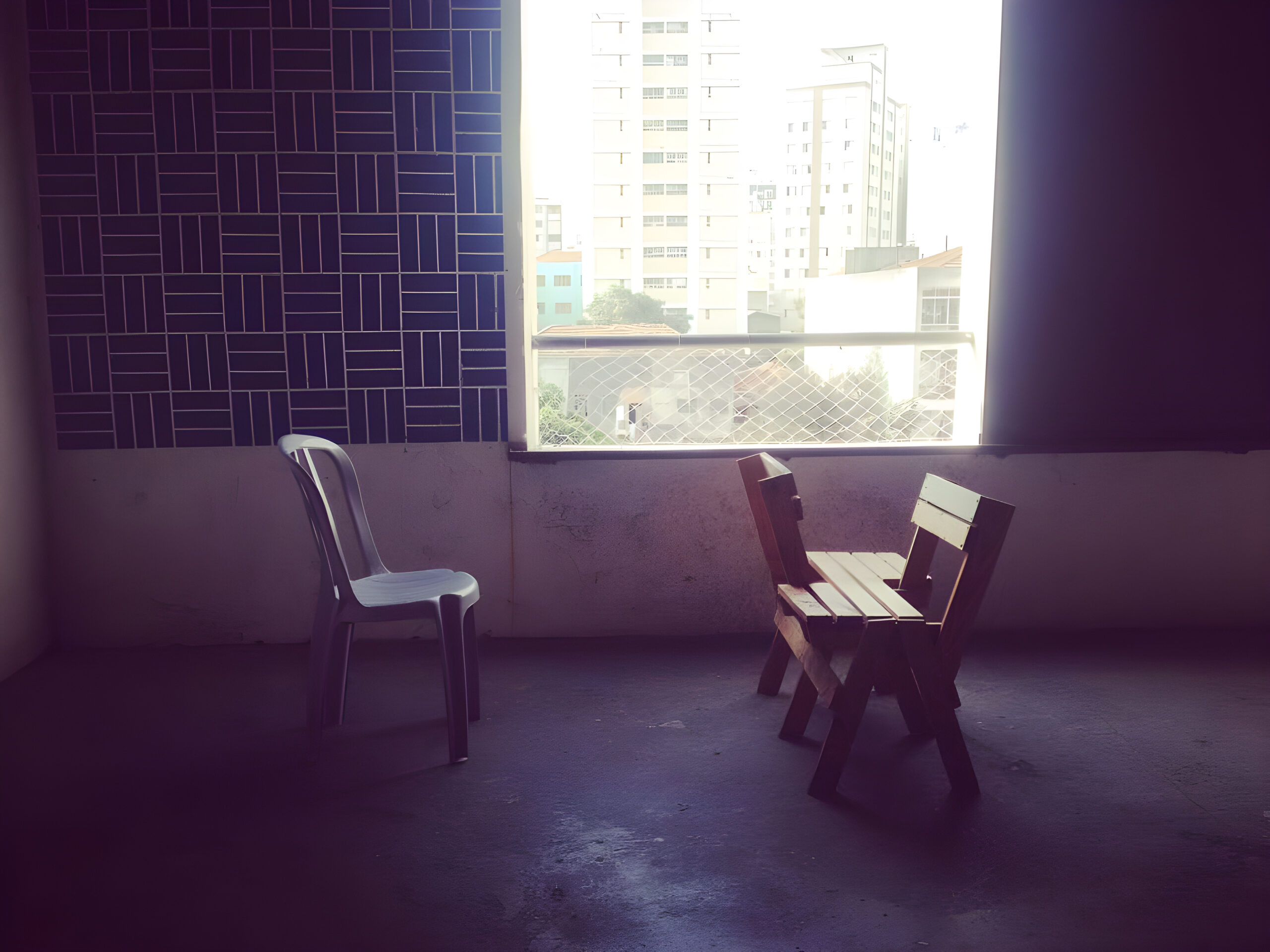
Blue Dreams Series, 2026.
How do free psychoanalytic clinics question and expand the horizons of what psychoanalysis can be and who it is meant for? This conference is dedicated to the legacies and to contemporary work done by free psychoanalytic clinics around the world. We start from the premise that psychoanalysis needs to be placed in the context of political movements, of feminist, anti-racist and anti-colonial politics, and in the context of class struggle.
We invite psychoanalysts, psychosocial researchers, historians, patients, activists, artists, and anyone else interested in the history of free and low-cost psychoanalytic clinics to join us in thinking together about the horizons of what psychoanalysis has been and what it could become.
The conference is organised across six different strands or ‘spaces’, detailed below. Each ‘space’ will take around half a day, and it will contain 2 panels (around 6 presentation slots per ‘space’). We aim to give voice especially to collectives who have not yet been present in FREEPSY events, or to themes and angles that have not yet been discussed. We will aim to not simply ‘accept’ or ‘reject’ papers, but to invite presenters who address us to contribute either to the six live conference strands, or to the Living Conference Space, a conference archive, introduced below. In this way, everyone who has the desire to speak and share ideas in this forum will have the opportunity to do so.
We invite abstract submissions for conference papers (20 minutes each), but also proposal/abstract for creative formats: workshops, artistic interventions, visual material, video letters, audio letters, collages and more. Our aim will be to construct a Living Conference Space, a digital archive with the various conference submissions, which can exist beyond the occasion of the conference, and further the engagements between different free clinics collectives around the world. We will start by putting together the Living Conference Space before the event: the creative submissions will be posted there and enrich and inform the discussion spaces of the conference.
Your titles and abstracts of maximum 300 words can be submitted by July 12th 2026 to the email address freepsy@essex.ac.uk.
You will hear from us by July 31st 2026 on whether you contribution is invited to the hybrid conference space (in London at The Lift & online) on December 4th, 5th and 6th; or to the Living Conference Space. If your contribution is invited to the Living Conference Space, we would like to receive it by November 1st 2026.
Please let us know when you submit your title and abstract whether you intend to join the conference in person, in London, or online. Please also mention which of the six ‘spaces’/strands described below you are submitting your contribution for.
In our events at FREEPSY, we have experimented with multilingual conversations. Your submission does not need to be in English. We will aim to include you in the space irrespective of the language of your submission. We will be using human and automatic translation options to sustain our exchanges.
This conference is the third international conference on free psychoanalytic clinics, and sees itself as continuing the first two, organised by Joanna Ryan, Raluca Soreanu and Ivan Ward in 2021 (Psychoanalysis for the People: Free Clinics and the Social Mission of Psychoanalysis. Part 1: Sites and Innovations, 16-17 January 2021; and Psychoanalysis for the People: Free Clinics and the Social Mission of Psychoanalysis. Part 2: Diversity of Practices, 24-25 July 2021).
The conference is free of charge for online participants. There will be a small registration fee for in-person attendees, with bursaries for anyone who would not be able to attend without financial support. Income from the conference will go to free clinics in London. Details on the Living Conference Space will also be made available before the event.
This conference is part of the FREEPSY Free Clinics Festival November 16th – December 6th 2026, London. Please check the FREEPSY website for other events of the festival, which include workshops, talks, mutual interviews, book launches, archive conversations and art exhibitions, held in several locations in London, including The Freud Museum.
Conference Spaces at a glance:
Space 1: Clinical Cultures & Practices
Space 2: Liberatory Praxis
Space 3: Stories from the Free Clinics
Space 4: Histories of Free Clinics
Space 5: The Future of Psychoanalysis
Space 6: Space Otherwise
Space 1: Clinical Cultures & Practices
Free clinics are laboratories of theoretical, clinical and political experimentation. In this strand, we ask questions about their creativity and follow their particular innovations in terms of understanding and practising an expanded psychoanalytic ‘frame’. Many free clinics around the world work with group dispositifs, ranging from group supervision, to listening groups focusing on vulnerable populations, to social cartography. Others pluralise and politicise the sites where psychoanalytic listening takes place, and practice psychoanalysis in public squares and in the streets, or in places where state or police violence has taken place.
Others offer a new vocabulary for a psychoanalytic listening that is deeply connected to the community or to the territory (‘territorial listening’); or elaborate on the possibility of institutional transference. What brings these clinical cultures together is their contribution to the creation of a ‘psychoanalytic commons’. In our research collective, we understand ‘psychoanalytic commoning’ as the work of actively weaving and sustaining communities of collaboration and action around the dimension of life that has to do with psychic suffering, fantasy and the productive power of the unconscious. In this strand, we are interested in exploring how clinicians and free clinics collectives around the world contribute to this ‘commons’ through their innovations of new psychoanalytic dispositifs.
We ask:
- What are the genealogies of the innovations of the ‘frame’ happening in the work of free psychoanalytic clinics?
- How are these innovations theorised and how are they practiced by the free clinics?
- How do they contribute to a ‘psychoanalytic commons’ and how do they expand what psychoanalysis is?
- What are the implications of the group dispositifs on addressing social inequality or creating spaces for working-through collective trauma?
Space 2: Liberatory Praxis
Psychoanalysis – and psychoanalytic free and low-cost clinics – can open up new possibilities for anti-racist, anti-imperialist, feminist, and trans-inclusive clinical ecologies. Here, suffering is placed at the centre of a reimagined social bond. Rather than focusing solely on symptoms and their treatment, this approach encourages us to consider new frameworks and methods for re-examining issues of race, class, gender, and coloniality within psychic and external realities. In this way, psychoanalysis moves towards a new economy of care, struggle, and resistance – one in which money, suffering, time, space, and other resources are reorganised and recognised as fundamental to our collective survival. Rather than prioritising symptoms or mere adaptation to social norms, this perspective urges us to develop an alternative praxis and theory for rethinking a politically open clinic. This strand is dedicated to developing a theoretical vocabulary for understanding the political dimension of psychoanalytic practice. Free clinics around the world transform Freud’s couch into an ‘anti-racist dispositif’, especially when psychoanalysis becomes interwoven with emancipatory movements and diverse struggles for liberation.
Accordingly, this strand invites papers, artwork, and creative presentations that look at how psychoanalytic practice can address the realities of social inequality—whether based on race, class, gender, poverty, or other forms of marginalisation.
We ask:
- How do free clinics reveal aspects of a postcolonial Freud?
- What dispositifs of free psychoanalytic clinics gesture to an anti-racist, anti-imperialist, feminist, and trans-inclusive practice?
- How can psychoanalysis engage with or resist state agendas?
- In what ways are race, gender and class formations present in both clinical and institutional contexts?
- What are some of the difficulties encountered by free clinics in our times – be they related to funding, to bureaucratic demands etc – and in what ways are these related to gender, racial and class issues?
Space 3: Stories from the Free Clinics
Psychoanalytic theory is inseparable from the discussion of clinical cases, yet the purpose of such presentations is not always unambiguous. This strand invites contributions centred on clinical vignettes and case material emerging from work in free psychoanalytic clinics. We seek to open a space for clinicians to share and reflect on their experiences of working with patients in these settings, where questions of access, precarity, and institutional conditions often shape the analytic encounter in specific ways. At the same time, we remain attentive to how these stories are told and for what purposes they are mobilised.
Rather than treating vignettes as mere illustrations of theory, this strand aims to explore the stakes involved in selecting, framing, and presenting clinical material. We particularly welcome reflections on how case discussions might be conducted in ways that do not objectify patients, including possibilities for inviting their participation in the telling of their own experiences. We also welcome experiments in collective clinical writing.
We ask:
- What is at stake in the choice and framing of a clinical vignette?
- Can clinical case discussions move beyond illustrating theory toward generating new forms of knowledge?
- How might clinicians present case material without objectifying patients?
- What ethical considerations arise when sharing clinical material, particularly in contexts of free clinics shaped by inequality and vulnerability?
Space 4: Histories of Free Clinics
Psychoanalytic and psychoanalytically-informed free and low-cost clinics have existed almost as long as psychoanalysis itself. Early free clinics experiments brought psychoanalysis into the public sphere. Psychoanalysis has historically been present in residential settings, in therapeutic communities, or in schools and hospitals. Is has been interwoven with various other emancipatory activities and therapies and imagined collective ways of being, relevant for clinicians and patients alike. In this strand, we invite contributions that shed light to lesser-known historical free clinics, and to the practices and figures involved in their work.
We are interested in how collectives around the world have practiced psychoanalysis otherwise and have questioned the hierarchies that exist within and without the consulting room, especially before the 1970s. We welcome contributions that discuss specific historical free clinics, looking at the psychoanalytic methods they used, their ways of funding, at patient’s and clinicians’ experiences, at daily life in the clinic, and at their relationship to their social environment. We are also interested in how they navigated times of political struggle and unfreedom. Ultimately, tapping into forgotten or foreclosed histories of free clinics is of particular importance for transmitting a progressive history of psychoanalysis.
We ask:
- How did specific historical free clinics organise their work?
- How does the history of early free clinics change our understanding of psychoanalytic history and historiography?
- How do socio-political circumstances influence the expansion, contraction, or dissolution of free clinics?
- How did historical free clinics operate in conditions of political struggle (under authoritarian, dictatorial, fascist regimes, or in times of war and displacement)?
Space 5: The Future of Psychoanalysis
This strand explores strategies for sustaining collective life in times of polycrisis from a psychoanalytic perspective. The acceleration of climate disaster – alongside the rise of technofascism, genocidal colonialism and essentialist patriarchy in various parts of the world – coincides with a social and relational turn in psychoanalysis. On the streets and in community centres, psychoanalysts are challenging hegemonic notions of care, mental health, and diagnosis, by de-medicalising, de-individualising, and re-politicising experiences of suffering within the social bond. Alert to modes of social and discursive reproduction, as well as to micro-scale efforts that sustain liveable life, free clinics emerge as a paradigm through which our understanding of living together can be rediscovered.
In an effort to reorient the field toward the necessity of liveable lives, this strand turns to questions of positionality, situatedness, and responsibility for a future-possible. What are the futures of a clinic attuned to the unconscious? What is at stake when we come together, psychoanalytically? How might we imagine spaces of togetherness that work with the unconscious? We are interested not only in the challenges of sustaining psychoanalytic spaces amid economic, (neo)liberal, and neofascist landscapes, but also in strategies for making psychoanalysis more porous, more plastic, and more deeply implicated in its times.
We ask:
- What is the future of psychoanalysis in a world of polycrisis?
- How are matters of possible futures and futurity addressed in free clinics?
- How can we think about situatedness and positionality in the psychoanalytic clinics?
- How can we think about the social responsibility of psychoanalysts?
Space 6: Space Otherwise
Free clinics around the world do not innovate only in political and clinical domains, but they also bring a new aesthetic. This aesthetic is also an intervention in the way we understand the place of madness in society, the boundaries between those deemed ‘sane’ and those deemed ‘insane’, and the relationship between the patient and the doctor/psychoanalyst. This ‘other space’ of the conference will create a multi-sensorial landscape where we can tap into this aesthetic. It will offer a prism to ‘un-do’ Freud’s couch, and to recompose and transform it in a way that is useful for current times and for current ways of suffering.
Our ‘space otherwise’ is open to creative presentations, artistic performances, poetry readings, collective readings, storytelling, sound art projects, and visual art. This space is open to all, transcending academic and clinical determinations. In this space, we will also sit together with and immerse ourselves in some of the art projects of the FREEPSY collective created over the past four years.
Join us & spread the word!

