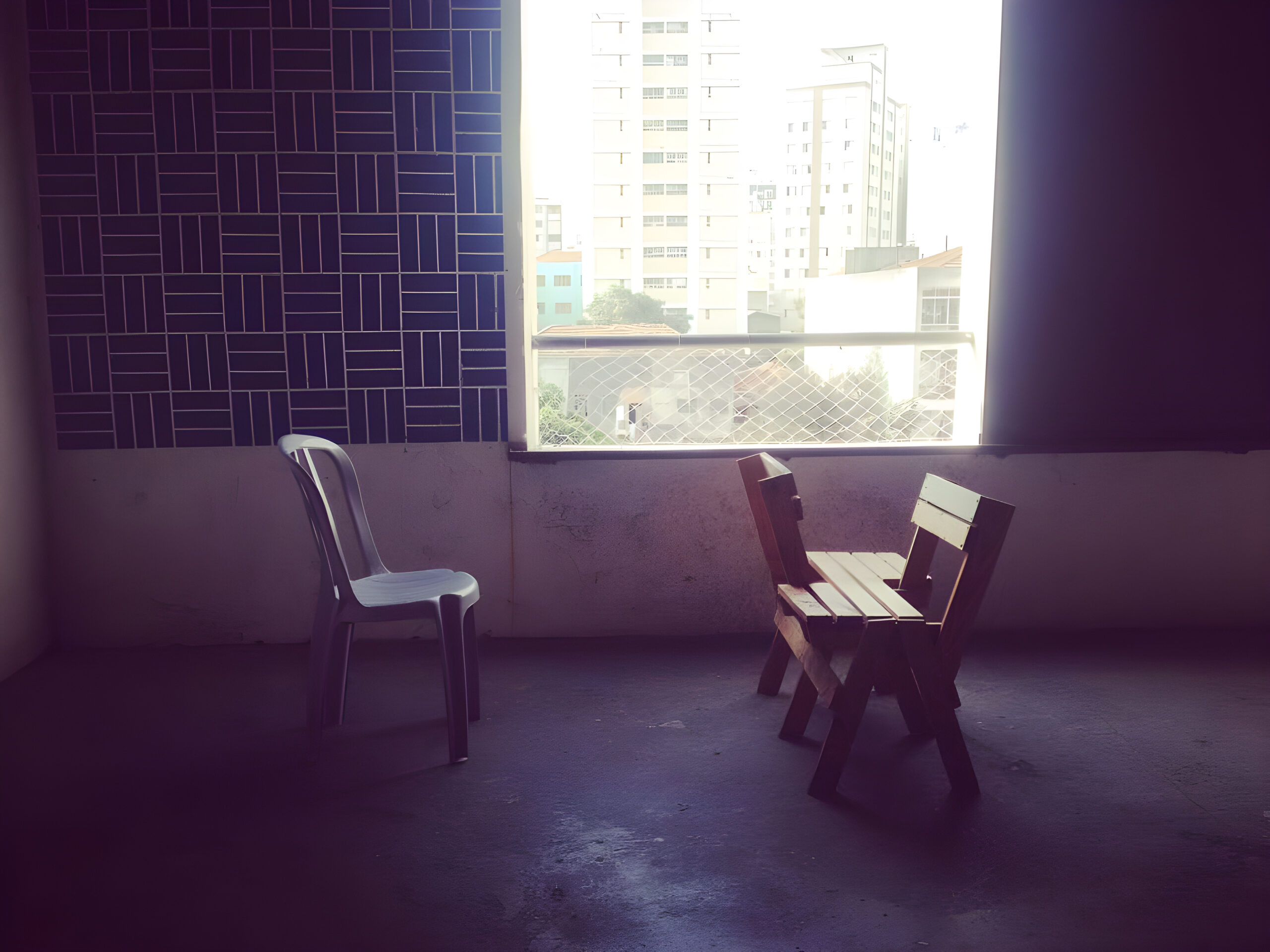

Grupo Diversidad at Hospital Ameghino in Buenos Aires.
In the landscape of global mental health, the pioneering work emerging from Buenos Aires’s Hospital CSM N° 3 “Arturo Ameghino” offers a vital model for psychoanalytic practice in the field of diversity. The recent official establishment of the “Área Diversidad” in December 2024 represents a significant institutional milestone, yet it is the culmination of a years-long, pre-existing clinical commitment. A dedicated group of clinicians has long been forging a path of specialized accompaniment for the LGBTTIQA+ community, with a particular focus on transgender and non-binary children, adolescents, and adults. Their work demonstrates how psychoanalytic theory, when critically engaged, can be mobilized to provide affirming and nuanced care, challenging the historical pathologization of diverse gender and sexual experiences.
What makes this initiative particularly instructive for an international audience is its deeply embedded methodology. The clinicians operate not in an institutional vacuum but within a vibrant ecosystem of care, maintaining close collaboration with city-wide health networks and community activists. This dialogue between clinic, community, and public health policy enriches their practice, allowing them to refine an approach that is both theoretically robust and socially responsive. By sharing their journey from a grassroots collective to an officially sanctioned area, these colleagues from Buenos Aires provide a powerful blueprint. They teach us how to build bridges, challenge institutional inertia, and pioneer a contemporary, ethical psychoanalysis that holds the singular subject at its core—a lesson of profound importance for colleagues worldwide.
*This text was written in collaboration by Cecilia Montenegro, a member of the Diversity Group of CSM No. 3 Ameghino, and Alba Rueda. Alba Rueda is an Argentine trans activist and politician, and a prominent defender of the human rights of LGBTIQ+ people from the Global South. She served as Undersecretary for Diversity Policies in the Ministry of Women, Gender, and Diversity (2020–2022), and later as Argentina’s Special Representative on Sexual Orientation and Gender Identity in the Ministry of Foreign Affairs, International Trade, and Worship.

“I give you this message
And it is not for me I am old
And your utopia is for future generations There are so many children who will be born
With a broken wing And I want them to fly, comrade
May your revolution give them a piece of red sky So that they can fly.”
Pedro Lemebel, Manifesto (I speak for my difference), 1986.
Civilisation and Its Discontents, a text written by Freud almost 90 years ago, clearly explains how the human order entails a resignation from satisfaction. The drive, a concept that straddles the somatic and the psychic, unlike instinct, does not have a pre-established object that can satisfy it. From this perspective, social unrest is considered to have an instinctual basis that cannot be avoided. However, this structural and irreducible unrest is often used to account for a wide variety of phenomena observable in the broad field of social life, where different groups suffer different forms of attack, aggression and segregation. We thus note that many forms of unrest are rendered invisible when these effects are conceived as products of an unchangeable human condition. Another kind of living rock [Otra especie de roca viva]. In other words, there is a failure to recognise that there is a heterogeneous and unequal distribution of discomfort, which is not attributable to the instinctual condition of human sexuality, but rather to the way in which power relations affect the rights of different groups. They establish norms that, when naturalised, become invisible but operate with great force outside the field of consciousness. Forms of dependence are generated according to an order that establishes as ‘natural’ what is expected of people in order for them to be recognised as such.
Referring to Foucault, it is interesting to note that the philosopher records that it was not until Freud that childhood sexuality was discovered, but that in 18th-century pedagogy books, children’s sex was already repeatedly discussed. Hence, there are various discourses produced to prevent a certain sexuality. The aim was to make parents understand that a fundamental problem in their educational task was their children’s sex and to make children understand that there was a crucial problem for them: the relationship with their own body and sex. The child’s body was sexualised, as was the relationship between the children’s bodies and those of their parents and, by extension, the entire family space. In this way, the powers that be positively produced sexuality, marking the alternation between pleasure and suffering.
The microphysics of power, Foucault proposes, penetrates bodies to make them politically docile and economically profitable. It is about disciplining them. It is a physical relationship between power and the body, to regulate its gestures, behaviours, habits, and words. Humans are as diverse as cultural and historical conditions have made us. Everything we are is the result of history, and “everything that is historically constructed can be politically destroyed” (Foucault, 2019). He proposes that we must be attentive to the intolerable, to what is “normal” for the majority. Madness, for example, is constructed by the discourses that point to it, interpret it, and turn it into pathology. The existence of madness depends on ways of speaking and acting, which are even more resistant than ideas. Foucault calls them practices, and madness is the result of historically determined practices. Sexuality is also the result of historical practices. What we understand today as sexuality is the result of both the rules established by those in power and the value that each person gives to their behaviour, feelings and dreams. As a way of being, sexuality is incorporated into the body, forming a whole. It is “incorporal”. It is historical and does not survive the practices that produce it. Heterosexuality and homosexuality are incorporal; they are ways of being that belong to our culture, subject to hierarchisation according to the perspective of each era. Originality and novelty can arise from disobedience and rejection. For more than a century, women have been disobeying practices that constituted them as such. Disobedience and rejection arise from the perception of the intolerable.
Silvia Rivera Cusicanqui (2018), a Bolivian sociologist and historian, proposes the concept of destituting power, drawing on ideas from Huascar Salazar Lohman, who presents the dialectical pair, constitutive moments/destituting moments. The former are centred on the state, the author points out, while the latter occur in the mobilisation of specific communities through their own “praxis”. These are “moments”, the tip of the iceberg of a power that is the power of “ordinary people”. This underground magma goes beyond the moment and continues after the climax to incubate other truths, other reasoning, which will eventually emerge in the public sphere once the appeasement phase is over.
However, the magma of truths that survive underground, or the marginalised knowledge that may one day have a voice, will not be recognised except in the form of experience, a privileged way of connecting with the human and undervalued from certain psychological perspectives. According to Agamben (2010), contemporary man has been expropriated of his experience, and it is precisely the inability to translate it into experience that makes everyday existence unbearable. The first manifestations of this oppression were only found in the 19th century. It is the everyday, not the extraordinary, that constitutes the raw material of experience. Its correlate is not knowledge but authority, that is, the word or the narrative. On the contrary, what characterises our present, Agamben asserts, is based on the unexperienceable, and we are unwilling to accept as valid an authority that is legitimised by experience.
In recent years, despite resistance from various quarters, many voices have made themselves heard and have been appreciated as ways of understanding human suffering. In this group, we see all dissident identities emerge. It is from this position that we bring an extract of experiences, conceivable from different devices that operate on each existence.
Textures of memory
“Here, I propose to address a series of memories linked to my first experiences in psychoanalysis as a trans adolescent patient, evoking and recalling my first letters in the literacy of psi violence, fragments of a personal history that I update in order to bring a reflection to share.
To do so, I will quote myself, revisiting and rewriting these stories in new ways, exorcising both my own and others’ experiences. In other words, I am not seeking an experiential description, but rather I am interested in advancing a precise observation that transmutes into the language of gender politics of a trans person, activist and adult, who evokes their life journeys and reflects on them with other knowledge, uses of their own and others’ words. A perspective that exemplifies and tests the modes of appropriation of the voice.
This exercise interests me in order to reflect on the trans identities that are cited to support a psi theory. The citation as a use of language in function of an epistemic position. It is interesting to note that what is taken as evidence of trans voices is tainted by discourses of cis authority about what is wrong in our lives. It is therefore a question of understanding that there are many narratives that make up transness, that they are temporal, social and political narratives, and that by mentioning them here, they also become part of a narrative that can come into dispute with others. This is how a new and beautiful metaphor is constituted about the different faces of what is experienced, remembered and appropriated-expropriated.
We can highlight two aspects in this exercise. On the one hand, the use of testimonies in academic texts, where quotations allow us to put into words a socially validated truth, a way of ‘making say’ what the author maintains. But there are also quotations where the recording of other voices are testimonies that are cut, relativised or neutralised in favour of the voice of the narrator, the author, who is ultimately the one who gives meaning to those expressions. This type of rhetorical argumentation of exemplary quotation is one of the most serious problems for trans people, because it takes away the political and epistemic value of our voices. Going beyond our narratives to say something different. Certain uses of language that give rise to memory with varied and different anchors, faithful to a dual condition that oscillates between the lived and the remembered, the description and the assessment of events, both of which are aspects that permeate our memory. Preserving memory as an instrument imposes on us a burden of suspicion between the sequential and its links. In this sense, acts of memory, such as the recollection of past events, require an explanatory detour for their understanding. An interpretation with indirect language, coded in clues, myths that express particular alternations linked to lack and transcendence, sometimes with tones of religious presence, of the prescribed, the timeless, such as those found in the passage between innocence and guilt. Thus, memory or remembrance are “figures of fallibility,” says Ricoeur, which are found in three functional modalities of otherness: that of the body, that of the other, and that of moral conscience (Ricoeur, 1997:31).
Under this framework, I place my biography to address the issue that brings us together. My first encounter with a psychological clinic was traumatic. I started therapy through one of my sisters, I think at the end of my 15th year or in the first months of my 16th. I was very curious and needed to talk, and the proposal wasn’t bad; it was a space different from home where I could talk about “what was happening to me.” But I already suspected that for my family, therapy was a space to “correct” my queer behaviour, and I, somewhere between ignorant and distressed, attended with naive interest.
That’s how I met Laura, the psychologist, who first listened kindly to one of the most significant events in my life, the death of my young brother and how it changed the family dynamic. That was a period of great pain in the family and deep personal loneliness. She also listened to my anger and envy towards two of my schoolmates, who seemed happier; they were so beautiful, cheerful and full of Buenos Aires knowledge, wearing their hippie clothes (a boom in the 90s), listening to Charly and Fito. I envied them when I saw them walking and observed the string of macho boys staring at their behinds. Perhaps I did not express myself clearly, but my envy included the respect and good treatment they received at school, because my experience at school was terrible. I faced contempt, silence and isolation from my classmates and teachers; they made it clear to me that my presence was uncomfortable and rejected.
From all these descriptions, Laura picks up on one of these messages and asks me why I envied “women”, why I looked at them with envy and not with desire. And here I take the opportunity to confess that it was me who wanted to wear those clothes, to be loved at school and desired by the boys I wanted in those years. In these mentions, I confess that I felt like a transsexual woman, and this changes the tone of the entire therapy session. She informs me how bad I am, especially for wanting to dress as a “woman.” There was something anticipatory about that space where I already felt judged, evaluated, and confronted, even more so after my confession.
From that session onwards, a monotonous series of encounters began where what I said was questioned, confronting me with what was natural, biological, continually bringing up the reference that ‘I was a man’, that I was wrong, and that I was causing my parents and sister a lot of suffering. However, my queer obstinacy was strong, because I really began to feel that I could no longer silence it, that I needed to talk about it, my time in the closet was running out, and although I was very distressed, I did not remain silent.
Then came the consultations, which were moments when, in addition to the session with Laura, I had to go to other interviews with a psychiatrist who worked with the person who supervised Laura. In all cases, the sole topic was my “sexuality.” By then, I had stopped talking about myself and was busy looking for arguments to get out of that therapeutic harassment, where before I even opened my mouth, we all knew what it was about and how we were going to act.
A subsequent two-month hospitalisation with men over the age of 18, a series of group meetings between men, and trips to Tigre where I socialised with them were all strategies that did not persuade me. Eventually, they ended up expelling me from that space, for fear of “homosexual contagion”.
Recovering these fragments of memories, I confirm that in the very use of language in my memory, there is a chain of reality mixed with what memory replenishes to give coherence and consistency to the story. On some occasions, it took away agency, and on others, it added a marked intensity. However, I have irrefutable data that is consistent in each of these fragments. I know I was there, that I was 16 years old, that I met those people, that they harassed me, and said terrible things. On a more subjective level, I remember that I was aware of these abuses but had neither arguments nor a way to defend myself, as I was raised in a cisgender binary culture where I knew contempt and my silence.
Something remains of the young woman I once was: anger towards those people, towards my family, but also the memory that the story about my identity was completely different from what I believe today. Just as my relationship with discrimination in institutional settings, with silence and with my desires has changed over the years, so too have all these opinions. Mainly the narrative I had about my identity. It was common at that time to believe that I had been born in the wrong body, to be a woman trapped in a man’s body, etc. The “man” that everyone outside had always pointed out to me – “the being for others”. What I mean by this is that I had representations that accounted for my identity with the tools I was able to develop at the time. Just like now, both are recorded with enormous differences. In my adolescence, I had no tools that allowed me to think outside the discourse of non-conformity, incongruity, or dysphoria, suffering because of who I was. I couldn’t figure out why many people treated me badly with impunity. At the same time, this reminds me that over the years I met a very elderly trans person, the oldest of the travas, and I remember that they repeated the discourse that we were “inverted”.
Through the years, through activism and militancy, I was able to know and inhabit trans visibility from a place of joy. I was able to understand a social asymmetry that racialises, impoverishes and subjugates large groups of people. We were forced into prostitution. I lived through a period where our identities were denied and persecuted by the state, and together we fought for our right to have our identities recognised, dissidents to a heterocisbinary and patriarchal system. This system is not far away; it inhabits our institutions, embodies us and subjects us to meritocratic, white, heterosexual conformations, and accounts for the profound exclusion of trans people. It leads to the ignorance of trans voices, voices diluted in cis knowledge. These forms of biopower are now one of the major topics on trans social and political agendas. They are life stories with oral memories that conceive political value in the legitimacy of their journeys and voices.
On the horizon of the depathologisation of transvestite and trans identities, these voices reveal their importance insofar as they refer to our population group. This implies an epistemic effort to preserve this record in the face of institutions colonised by monolithic cisheteropatriarchal knowledge.
With regard to the field of psi disciplines, we find an enormous asymmetry in the approach to trans and cis identities. If we look at psychoanalytic productions, we see that they describe homosexuality and transsexuality as a problem, an illness or an impaired reality. Our friend Jorge Reitter points this out by saying: “psychoanalysis as it is practised does not sit well with sexualities that do not conform to heterosexual norms” (J. Reitter: 2018, p. 15).
It is not a question of neutralising, cutting out or relativising trans narratives; in other words, there is no place for extracting, removing or disrupting a narrative. The transfeminist perspective makes an enormous contribution to the field of gender identities, especially by pointing out that gender identity inhabits particular voices, but that it is dispersed, diverse and irregular.
It is essential to review models that ignore the power of context, that dilute discomfort and suffering, ultimately conceiving, as several authors say, an unconscious without history. In line with this thinking, we return to the statements made by Thamy Ayouch in his paper “Cuerpos Desvelados y Sexo Verdadero” (Unveiled Bodies and True Sex), in which the author argues: “(…) the goal of benevolent neutrality does not exempt the analyst from their gender, sexuality, class, culture, or ethnicity (…) the vocation of psychoanalysis is not to assign norms of subjectivation. However, certain psychoanalysis sometimes deviates from this desire not to assign any normativity. Psychoanalytic theorisations will not succeed in being critical if they close themselves off to other discourses.”
Bibliography:
Ayouch, Thamy. “Unveiled bodies and ‘true sex’: genders, norms and psychoanalysis”, Dissertation at the XIII International Conference of the Forum on Psychoanalysis and Gender (APBA) 2017
Lemebel, Pedro. Manifesto (I speak for my difference), 1986
Cusicanqui Rivera, Silvia, A Ch’ixi World is Possible, Ed. Tinta Limón, Buenos Aires 2018.
Reitter, Jorge, Gay Oedipus, Ed. Letra Viva Bs As 2018
Ricoeur, Paul, Ideology and Utopia, Ed. Gedisa, 2005
Foucault, Michel, Microphysics of Power, Ed. Siglo XXI, 2019
Foucault, Michel, The History of Sexuality, Volume 3, Ed. Siglo XXI, 2014.
Freud, Sigmund, Civilisation and Its Discontents, Ed. Biblioteca Nueva, 1973.
Agamben, Giorgio, Childhood and History, Ed Adriana Hidalgo, 2010
Larrauri – Max, Sexuality According to Michel Foucault, Ed Fundación la hendija, 2011

