
On October 8 2025 FREEPSY presented at the Applied Section Meeting of the Institute of Psychoanalysis in London.
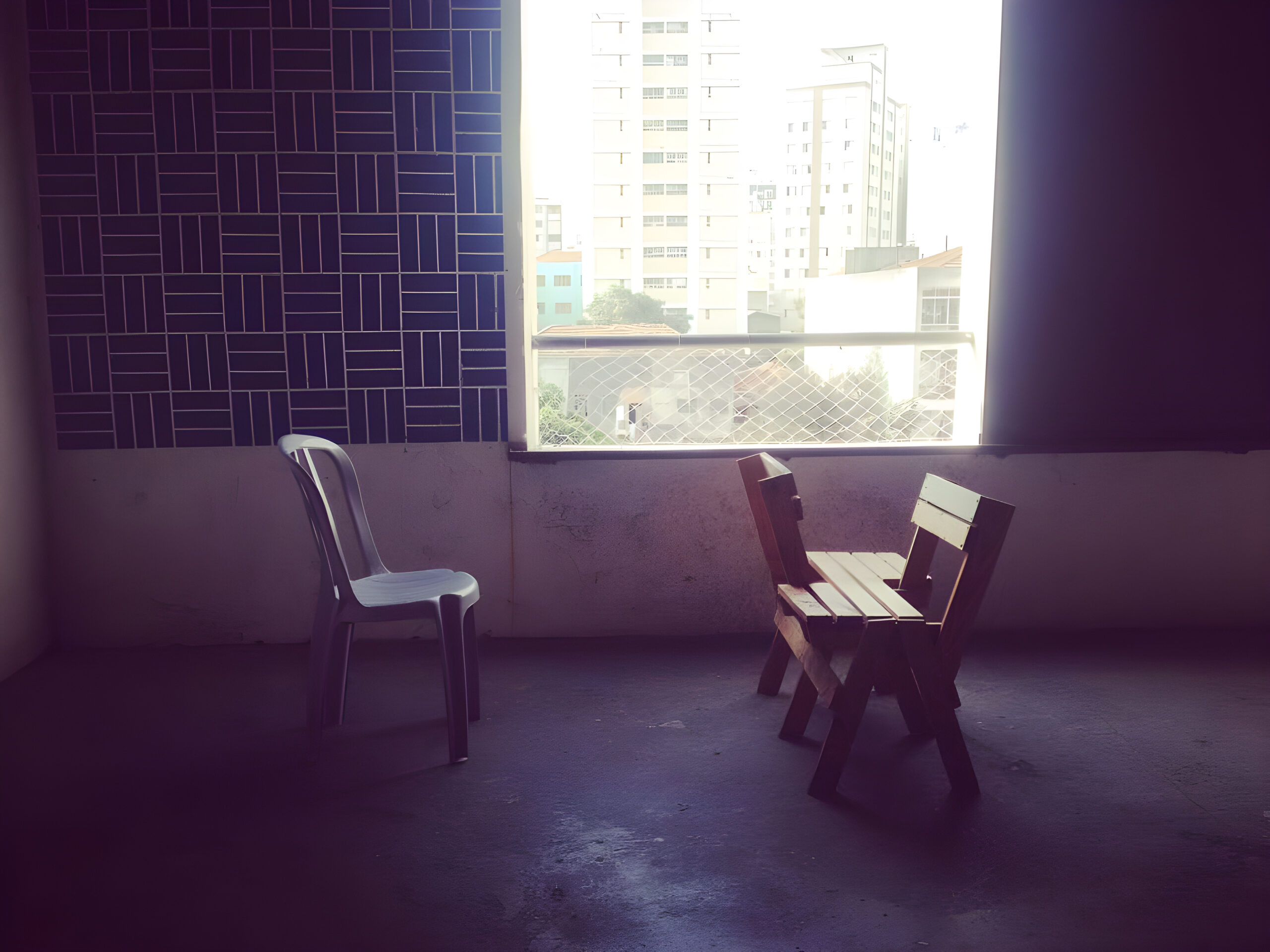
In this presentation, we argued that psychoanalytic clinics have had rich political and clinical ‘lives’ over the past century, but these have often remained invisible. We see psychoanalytic free clinics, in their plural and polyvocal manifestations, as a global movement, connected by a series of important theoretical-clinical principles, by an ethos, and by a rich set of revisions and innovations in the domain of the psychoanalytic frame. All these innovations need to be both historicised and theorised. In our discussion, we traced the metamorphoses of Freud’s couch, which happen when psychoanalysis becomes entangled with emancipatory movements and liberation struggles of various kinds, and engages with the realities of social inequalities based on race, class, gender, poverty, and other forms of marginalization. We offered a critique of the idea of ‘applied psychoanalysis’ and placed the notion of ‘infrastructures’ and ‘infrastructural thinking’ at the heart of understanding how autonomous collectives of clinicians invested in the social mission of psychoanalysis innovate, by putting time, space, money, and suffering in new relations. Drawing on theoretical, historical, ethnographic and arts methods research, we moved from the ‘Barefoot Psychoanalyst’ in the 60s and 70s in the UK, to the work of Budapest Polyclinic pioneers in the 20s and 30s, to Brazilian antiracist free clinics in the past decade, to the artistic figuration of a clinic with porous and pliable boundaries.

As if to confirm the idea of ‘travelling concepts’ and transmission from the ‘periphery’ to the ‘centre’, members of the FREEPSY team were invited to the Institute of Psychoanalysis in London to present aspects of their work to the ‘Applied’ section of the British Psychoanalytical Society. The meeting was introduced by Stephen Frosh, Emeritus Professor of Psychology at Birkbeck and an academic member of the Institute of Psychoanalysis. The contributions of the speakers – Raluca Soreanu, Lizaveta van Munsteren, Ana Tomcic and Julianna Pusztai – were warmly received and resulted in a thoughtful and lively discussion.
The title of this event – ‘100 Years of Innovation and Critique: On Free Psychoanalytic Clinics as a Global Movement’ – was a reminder that the idea of a free, socially engaged psychoanalytic practice, working with marginalised communities and engaged with the realities of social inequalities based on race, class, gender, poverty, and other forms of marginalisation, is part of the history of psychoanalysis from the beginning. Raluca asserted that Elizabeth Danto’s book Freud’s Free Clinics (2005) captures the emergence of a tradition in psychoanalysis that has been erased in the ‘official’ history of the profession and hardly enters the consciousness of practitioners in the global ‘North’.
She continued: “Today, we bring you some questions stemming from the theoretical, historical, ethnographic and art-based research of the research collective FREEPSY, studying the histories and legacies of free psychoanalytic clinics globally. Our collective also starts from the 20s and 30s, but we move up to the present, in sites such as Vienna, Berlin, Budapest, but also many sites in the UK and, importantly, in Brazil and Argentina. Our research traces a tradition, indeed, as our title suggests: 100 years of innovation and critique.”
Raluca spoke of some of the theoretical and clinical innovations that have arisen from the free clinics movement, especially the explosion of autonomous psychoanalytic collectives in Brazil, and how they operate as laboratories of experimentation: clinical, theoretical, and political. She introduced the ideas of ‘mental health commons’, ‘clinical ecologies’, ‘infrastructural thinking’, ‘territorial listening’ and ‘plurivision’ — being open to other forms of knowledge in the supervision of cases. Such complex and creative clinical ecologies are not done justice to by the term ‘applied psychoanalysis’!
Raluca’s introduction was followed by papers by Lizaveta van Munsteren: ‘The Frame in Free Clinics: A Psychosocial Intervention’; Ana Tomcic: ‘Psychoanalysis, Deprivation and the Communal’, and Julianna Pusztai: ‘Horizontal Analysis: On the Barefoot Psychoanalyst’.
“I am going to be mentioning three names today: Nelly Wolffheim, Melitta Schmideberg and David Wills. Have you heard of these names? If you haven’t, I will not be surprised.
So, when I am asked, what is applied psychoanalysis, I want to answer that it is the field in which some of the most creative psychoanalytic thinking took place.”
Ana Tomcic
“The question is not only how we, as individuals, engage politically, or what kind of response is required of psychoanalytic societies. Rather, it is what kind of work is needed to reflect political and social issues within the theory and clinic of psychoanalysis.
For this paper, the frame can be defined as a set of conditions that preserve psychoanalysis as a liberatory experience: creating the space for the work of the unconscious to happen.”
Liza van Munsteren
The lively discussion that followed the presentations evinced a deep interest in the social mission of psychoanalysis, but also a basic question – is it ‘psychoanalysis’? It is an important question that can be seen as a ‘nodal point’ around which the FreePsy project works and struggles with. Not all independent therapeutic groups are included in the Free Clinics Network, for instance; there has to be an orientation and commitment to psychoanalysis, even if other therapeutic modalities and forms of knowledge may be embraced and utilised in different contexts. But it is also a question that shows a continuing gulf between the psychoanalysis of institutions and a psychoanalysis of the ‘streets’. Can we revise the question in the light of the different positions from which it is being asked? Is it psychoanalysis? or What is psychoanalysis?

